Classic
The 8 cranial bones (6 names)
Old People From Texas Eat Spiders: occipital, parietal, frontal, temporal, ethmoid, sphenoid. Parietal and temporal come in pairs, which turns 6 names into 8 bones. Its order is not the order of our list.
22 bones · 14 answers · about 2 min · type the name · free
Last reviewed by Type Anatomy · BodyParts3D, CC BY 4.0 (modified)
Start typing · The name is shown: type over it.Tap here to type
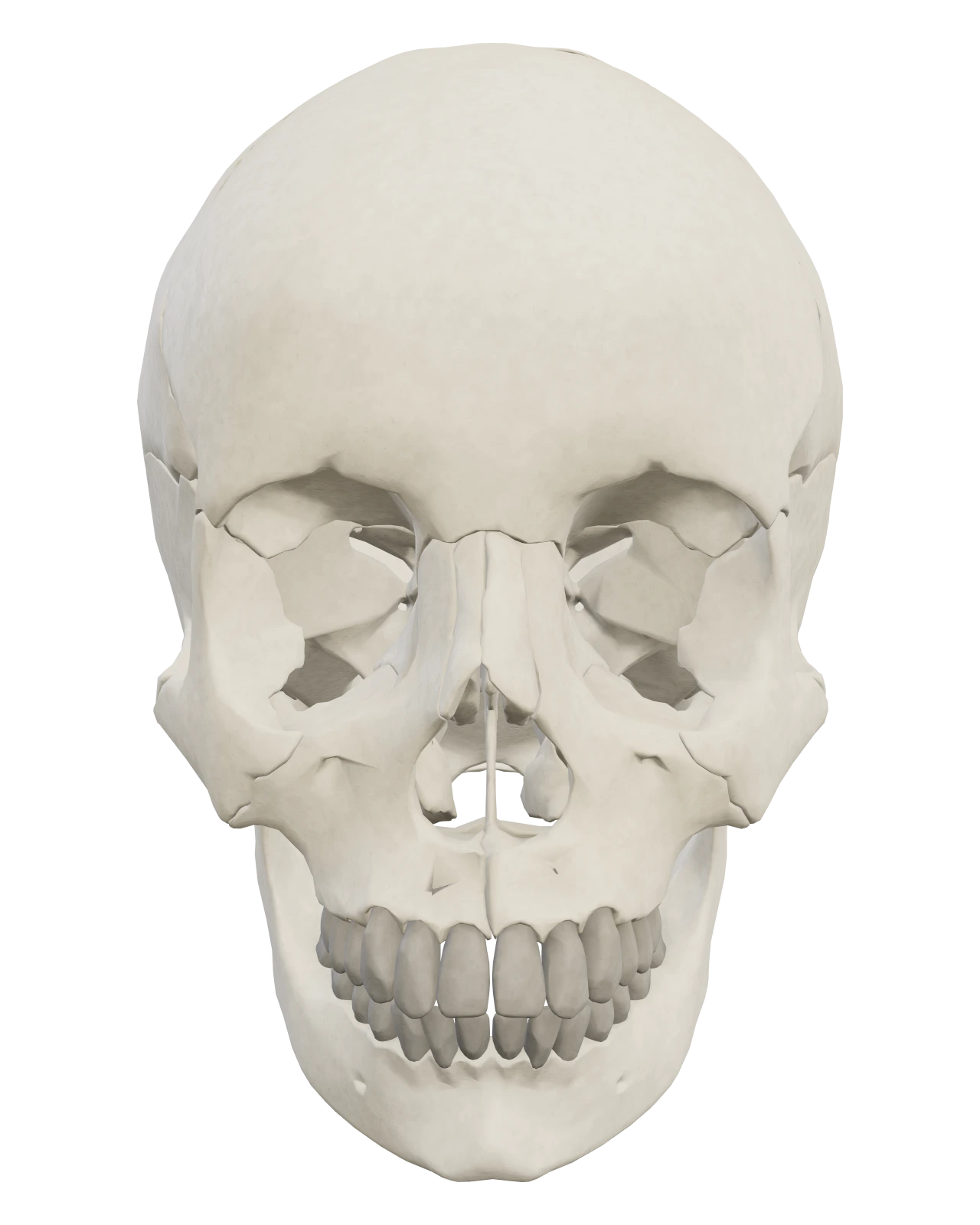
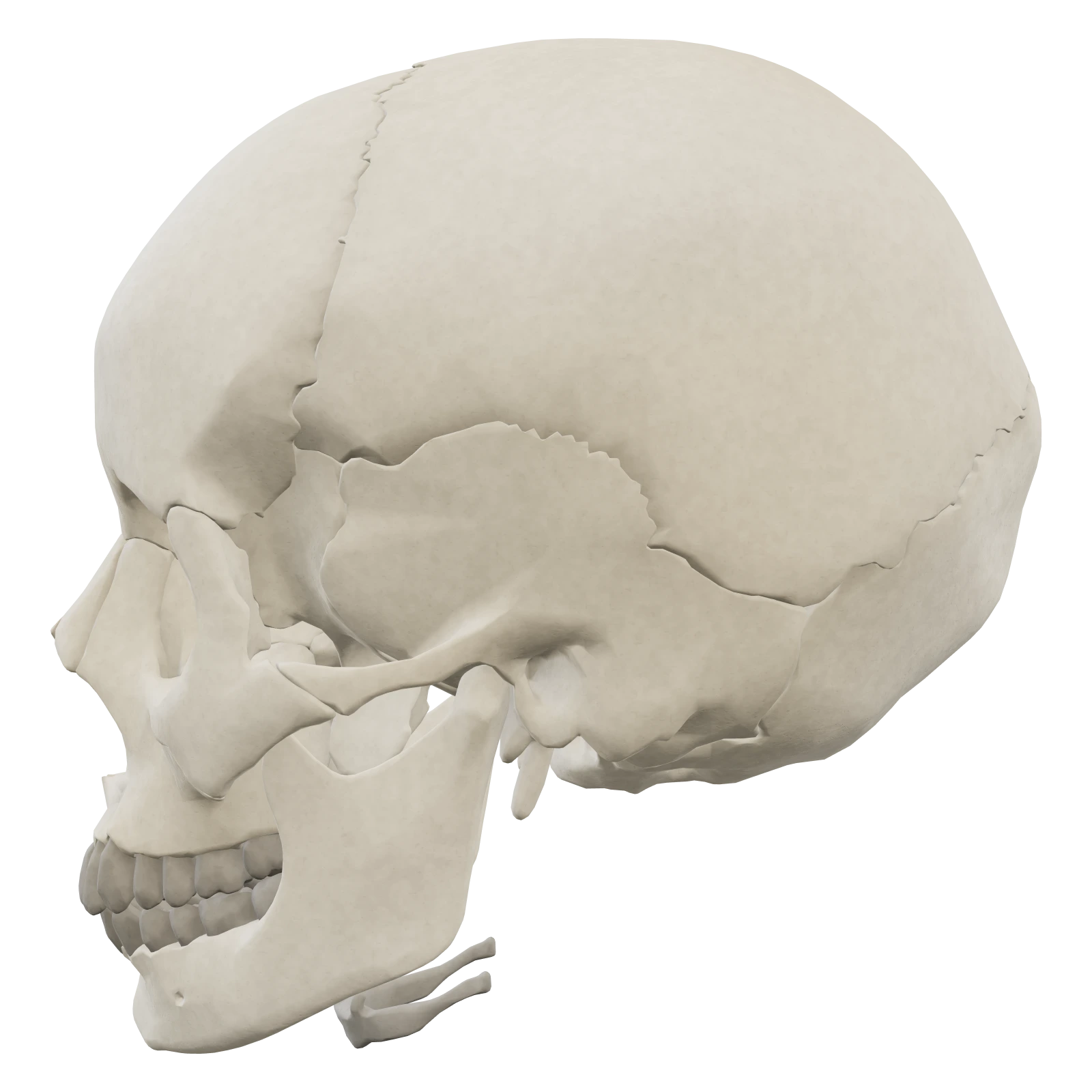
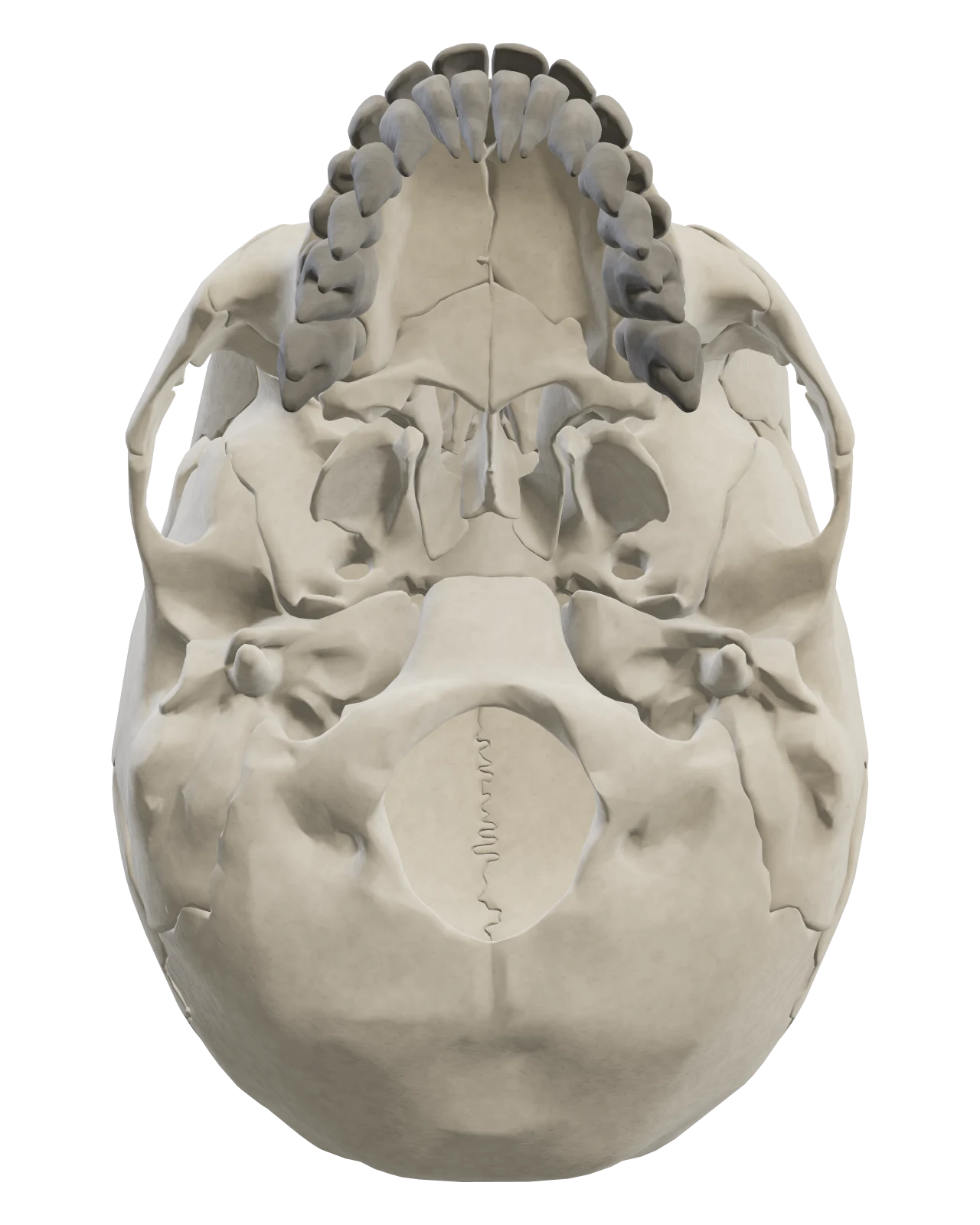
The adult skull has 22 bones: 8 cranial bones around the brain (frontal, 2 parietal, 2 temporal, occipital, sphenoid and ethmoid) and 14 facial bones (2 nasal, 2 lacrimal, 2 zygomatic, 2 maxillae, 2 palatine, 2 inferior nasal conchae, the vomer and the mandible). All of them are locked together by sutures except the mandible, the only bone of the skull that moves.
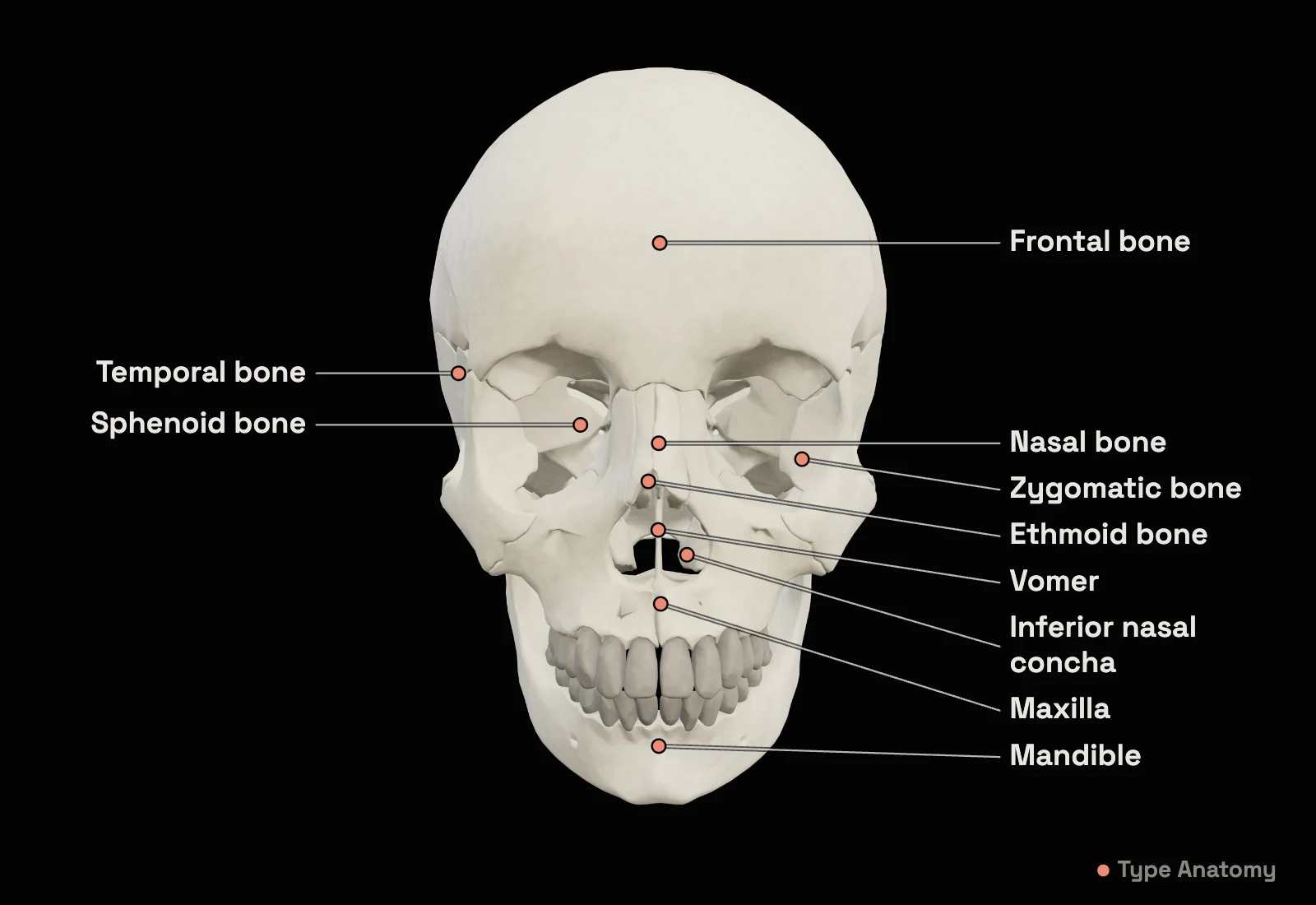
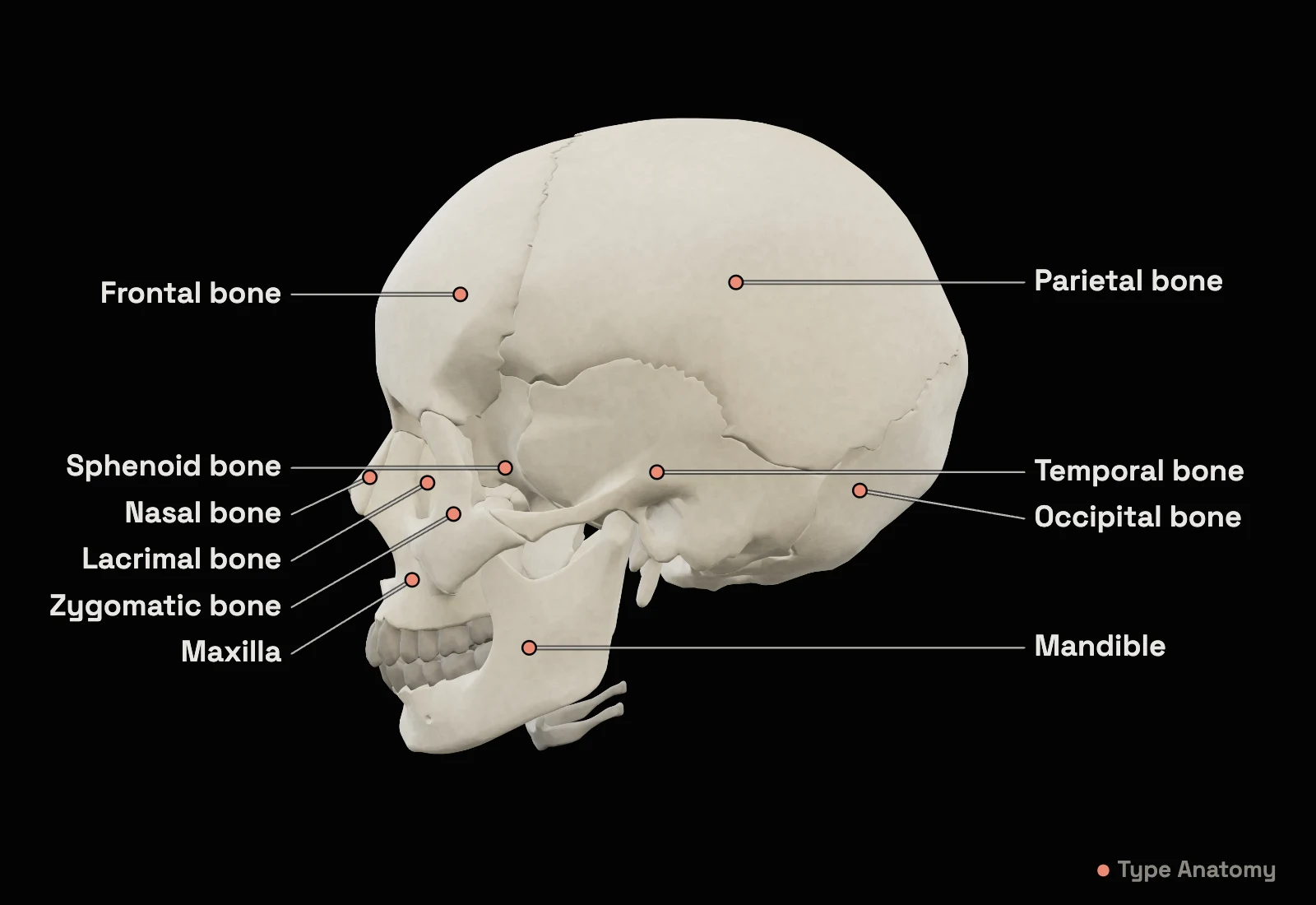
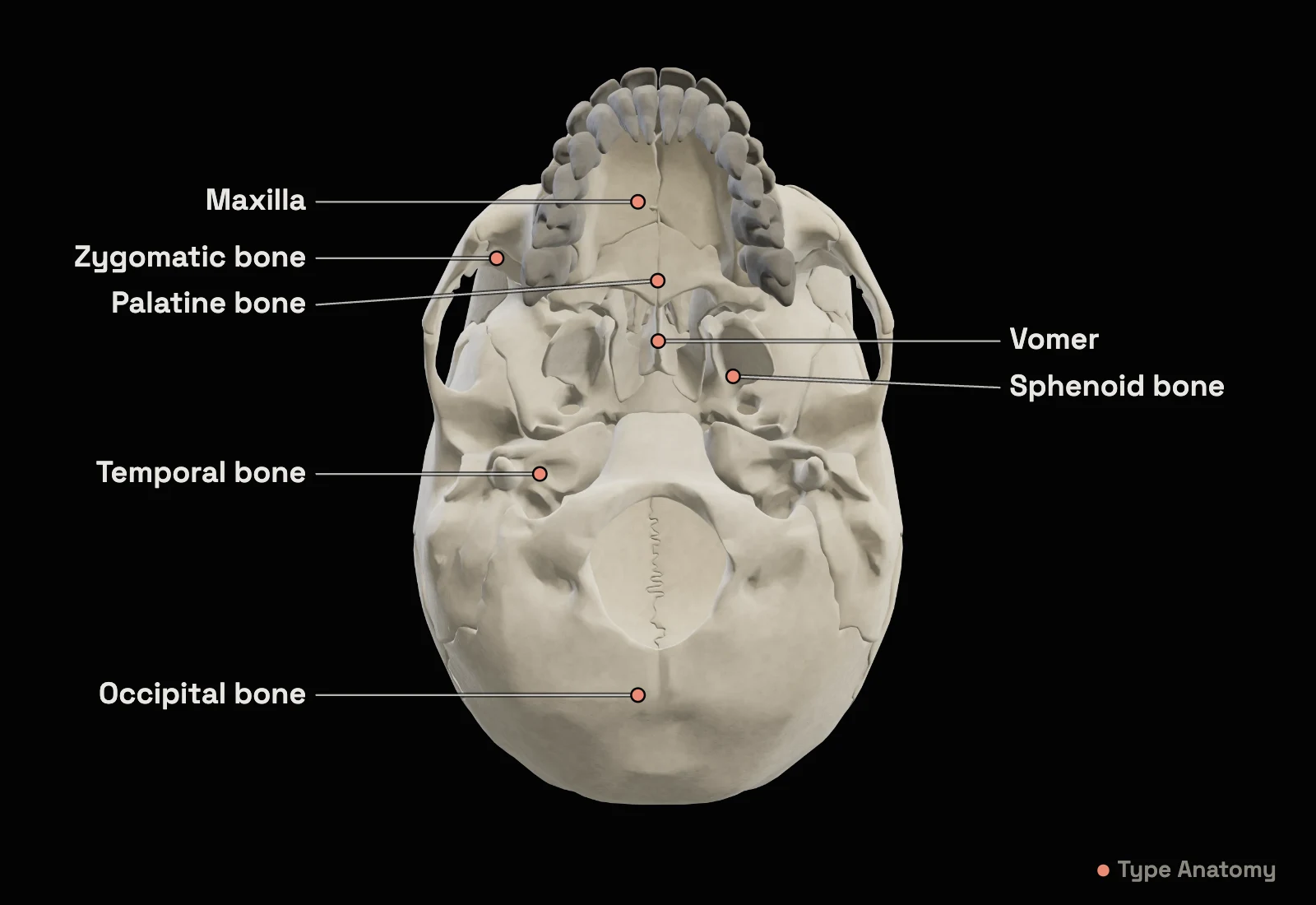
The skull from the front, from the left side and from below.
The quiz has 14 answers for 22 bones: each paired bone (parietal, temporal, nasal, lacrimal, zygomatic, maxilla, palatine and inferior nasal concha) is asked once for both sides. The hyoid and the 6 ear ossicles are associated with the skull but aren’t counted among its 22 bones, so they aren’t here.
| # | Name | Group | Where it is | How many |
|---|---|---|---|---|
| 1 | Frontal bone frontal, os frontale | Cranial bones (8) | Forms the forehead and the roof of both orbits. | 1 |
| 2 | Parietal bone parietal, parietal bones | Cranial bones (8) | Pair of bones forming the vault and the side walls of the cranium. | 2 |
| 3 | Temporal bone temporal, temporal bones | Cranial bones (8) | Houses the middle and inner ear and articulates with the lower jaw. | 2 |
| 4 | Occipital bone occipital, os occipitale | Cranial bones (8) | Closes the cranium at the back and surrounds the foramen magnum. | 1 |
| 5 | Sphenoid bone sphenoid, os sphenoidale | Cranial bones (8) | Butterfly-shaped, across the cranial base; its sella turcica holds the pituitary gland. | 1 |
| 6 | Ethmoid bone ethmoid, os ethmoidale | Cranial bones (8) | Between the orbits; its cribriform plate lets the olfactory nerves through. | 1 |
| 7 | Nasal bone nasal, nasal bones | Facial bones (14) | Pair of small plates forming the bony bridge just below the brow. | 2 |
| 8 | Lacrimal bone lacrimal, lachrymal bone | Facial bones (14) | In the medial wall of the orbit, behind the frontal process of the maxilla. | 2 |
| 9 | Zygomatic bone zygomatic, zygoma | Facial bones (14) | Shapes the cheek and the lateral wall of the orbit. | 2 |
| 10 | Maxilla maxillae, maxillary bone | Facial bones (14) | Holds the upper teeth and forms the floor of the orbit. | 2 |
| 11 | Palatine bone palatine, palatine bones | Facial bones (14) | L-shaped plate behind the maxilla that closes the back of the roof of the mouth. | 2 |
| 12 | Vomer vomer bone | Facial bones (14) | Single thin plate forming the lower back part of the nasal septum. | 1 |
| 13 | Inferior nasal concha inferior nasal conchae, inferior concha | Facial bones (14) | A curled, independent plate of bone low on the side wall of each half of the nose. | 2 |
| 14 | Mandible lower jaw, jawbone | Facial bones (14) | Horseshoe-shaped bone that holds the lower teeth and articulates with the temporal bone. | 1 |
| Total | 22 |
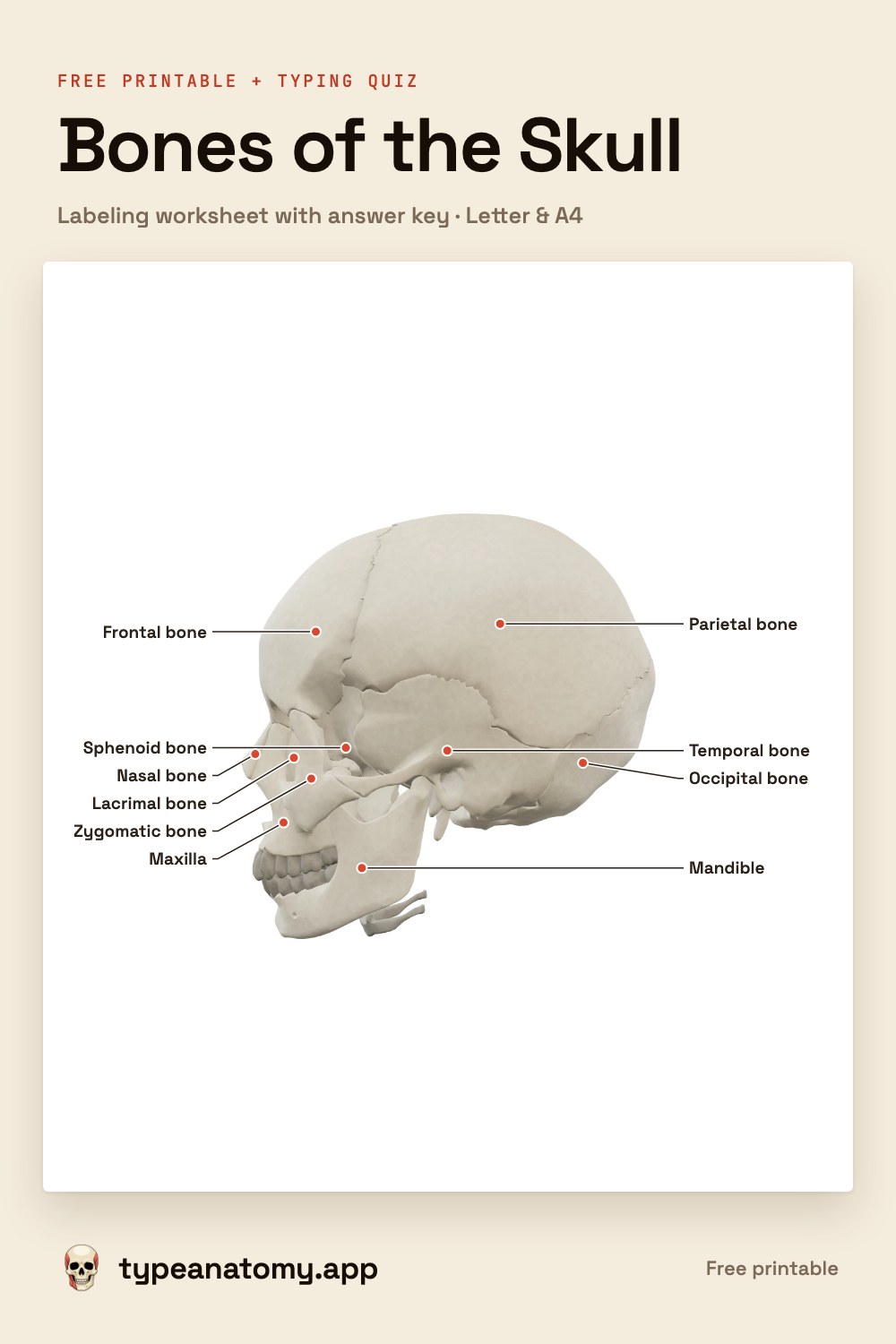
Download our labeling worksheet as a PDF, completely free. It comes with a word bank version, a blank version and the answer key.
Classic
Old People From Texas Eat Spiders: occipital, parietal, frontal, temporal, ethmoid, sphenoid. Parietal and temporal come in pairs, which turns 6 names into 8 bones. Its order is not the order of our list.
Classic
Virgil Can Not Make My Pet Zebra Laugh: vomer, conchae (inferior nasal), nasal, maxilla, mandible, palatine, zygomatic, lacrimal. All are pairs except the vomer and the mandible: 6 × 2 + 2 = 14.
Maxilla or mandible? The 2 maxillae hold the upper teeth and form the floor of each orbit; the single mandible holds the lower teeth and is the only bone that moves. Older books call them the upper and lower jaw.
Sphenoid or ethmoid? Both are single bones in the midline. The sphenoid spans the whole cranial base, and its greater wings show at the temples on a side view; the ethmoid is smaller and sits in front of it, between the orbits and above the nasal cavity.
The orbit is a favorite lab-practical spot: 7 bones meet in it (frontal, sphenoid, zygomatic, maxilla, ethmoid, lacrimal and palatine). Name them around the rim and the walls until you can do it without looking.
22: 8 cranial bones and 14 facial bones. Add the 6 ear ossicles and the hyoid, which are associated with the skull, and you get 29.
The 8 cranial bones form the braincase that encloses and protects the brain. The 14 facial bones build the face: they hold the teeth and shape the orbits, the nose and the roof of the mouth.
The mandible. It moves at the temporomandibular joint, where it meets the temporal bone; the other 21 bones are joined by sutures.
Parietal and temporal among the cranial bones; nasal, lacrimal, zygomatic, maxilla, palatine and inferior nasal concha among the facial bones. The frontal, occipital, sphenoid, ethmoid, vomer and mandible are single.
Yes. The quiz on this page is free and works on phone and computer, and so are the printable worksheets. The 3D version, where you turn the skull yourself, is a paid app, with a free demo so you can try it before you pay.
The same names on a 3D model you can turn: it lights up, you type, and you review what you miss with spaced repetition.
Open the 3D game